

Cleaning luxury vinyl tile is simple once you know what it is: sweep up the grit, damp-mop with a gentle cleaner, and keep three things off it that quietly wreck the finish. Luxury vinyl tile, or LVT, is a flexible resilient flooring made in tiles or planks, and that word resilient is the whole point. It looks like stone or ceramic, but it's built on a soft vinyl body with a thin clear wear layer on top, so the care that suits real tile can actually damage it. Get the routine right and an LVT floor holds its look for years. Get it wrong with a steam mop or the wrong mat, and the damage doesn't come out.
What Makes Luxury Vinyl Tile Different to Clean?
Luxury vinyl tile needs gentler care than the stone or ceramic it imitates, because the whole floor is protected by one thin clear layer on top. That top layer, the wear layer, is what takes the foot traffic, the grit, and the scuffs, and once you wear through it or scratch it deeply, there's no sanding it smooth again the way you would a wood floor. Ceramic tile shrugs off a steam cleaner and a stiff brush. LVT does not. So caring for vinyl is about protecting that thin surface and keeping anything abrasive or too hot away from it.
How Do You Clean Luxury Vinyl Tile Day to Day?
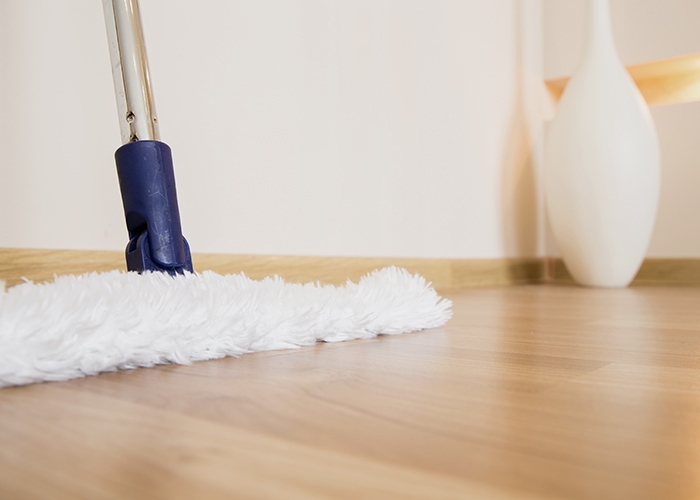
Day-to-day cleaning of luxury vinyl tile comes down to two steps: get the grit off, then damp-mop. Sweep, vacuum, or dust-mop often to lift the grit and sand that would otherwise grind at the surface every time you walk on it. For a deeper clean, the manufacturers of the luxury vinyl we carry call for a damp, well-wrung mop and a pH-neutral cleaner, which just means a cleaner that's neither acidic nor alkaline, so it lifts dirt without eating at the finish. Wring the mop until it's barely damp. Standing water is one of the few things that can work into the seams of a vinyl floor, so the drier the mop, the better.
Clear the grit first. Sweep, dust-mop, or vacuum with a soft-brush or felt head. Sand is abrasive, and dragging a wet mop over it just grinds it into the wear layer.
Damp-mop with a pH-neutral cleaner. Barely damp rather than wet. A cleaner made for luxury vinyl, or plain warm water for a light job, lifts everyday dirt without leaving a film.
Wipe spills when they land. The top of an LVT floor is waterproof, but a spill left to sit invites grime, and at the edges it gives moisture a way into the seams.
The Three Things That Quietly Ruin Luxury Vinyl Tile
Three everyday habits do more damage to luxury vinyl tile than years of foot traffic: steam mops, wax, and the wrong mats. Each one is easy to avoid once you know why it matters.
Steam mops. TRUCOR, one of the luxury vinyl lines we stock, tells owners plainly not to use steam mops or steam cleaners on it. The heat and forced moisture can loosen the layers and lift the edges, and that kind of damage means replacing planks rather than buffing out a mark. Care sheets differ a little from one product to the next, so it's worth keeping yours, but skipping the steam mop is the safe default across the board.
Wax and polish. The same care sheet says never to apply wax, polish, or floor finish, and that's advice worth taking, because the wear layer already is the finish. Wax doesn't soak into vinyl; it builds up into a cloudy film that traps dirt and is miserable to strip off later. A vinyl floor leaves the factory finished, and it stays looking best with nothing added on top.
Abrasive and harsh cleaners. Abrasive pads, scouring powder, and harsh chemicals round out the list the manufacturer warns against, since all of them scratch or cloud the clear surface. Skip the scrub brush and the bleach, reach for a soft cloth or a felt mop head, and you keep the low sheen that made the floor look like stone in the first place.
Why Rubber-Backed Mats and the Wrong Rugs Discolor Vinyl
The wrong mat can leave a permanent stain on luxury vinyl, which catches people off guard when they bought a kitchen mat to protect the floor in the first place. The manufacturer is blunt about it: don't use rubber-backed or latex-backed mats or rugs on vinyl, because the backing reacts with the vinyl over time and can discolor or stain the surface underneath. That stain sits down in the material, so it doesn't scrub out. Choose felt pads or a rug labeled safe for vinyl instead, and give any mat that traps moisture a lift now and then so the floor can breathe.
We wrote about which rugs are safe for vinyl floors, and it's worth a read before you put a rug down over new LVT. If a rug you love has already picked up grime or moisture, we clean area rugs, so it doesn't have to go to the curb over a stain.
Caring for Luxury Vinyl Tile at the Jersey Shore
At the Jersey Shore, sand is the thing that wears an LVT floor down, so the sweeping matters more here than the mopping. Every care sheet says to get grit and sand off the floor, and in a beach town that grit shows up daily, tracked in from a block away and dragged across the wear layer with every step. Put walk-off mats at the doors that face the beach or the yard, sweep or vacuum the high-traffic paths often, and you take away the one thing that actually scratches vinyl. Homes across Monmouth and Ocean County fight the same sand, and it's the quiet reason a shore floor needs sweeping more than an inland one does.
Humidity is the other coastal factor, though it troubles the room more than the floor. Luxury vinyl itself handles damp air fine, but a shore house closed up between guests can hold moisture that grime and mildew like, especially under rugs and mats. A fan or a dehumidifier running through the summer keeps the air moving and the floor drier, which is the same habit that protects everything else in a seasonal house.
Luxury Vinyl Tile Care at a Glance
Luxury vinyl tile care comes down to sweeping up grit, damp-mopping with a pH-neutral cleaner, and keeping steam, wax, and rubber-backed mats off the floor. Here is the whole routine in one place.
Do this | Skip this | Why |
|---|---|---|
Sweep or vacuum up grit and sand | Dragging a wet mop over sand | Grit is what scratches the wear layer |
Damp, well-wrung mop with a pH-neutral cleaner | Steam mops and flooding the floor | Heat and standing water lift the seams and edges |
Felt pads under furniture legs | Wax, polish, or floor finish | The wear layer is already the finish; wax clouds it |
Walk-off mats at beach-facing doors | Rubber-backed or latex-backed mats | The backing can permanently stain vinyl |
A soft cloth or felt mop head | Abrasive pads, scouring powder, bleach | Abrasives and harsh chemicals scratch and cloud the surface |
Luxury Vinyl Tile FAQ's
Can you use a steam mop on luxury vinyl tile?
No, steam mops aren't recommended for luxury vinyl tile. The manufacturers of the vinyl we carry, TRUCOR among them, specifically say not to use steam mops or steam cleaners, because the heat and moisture can loosen the layers and lift the edges. A damp, well-wrung mop does the same cleaning job without the risk.
What is the best cleaner for luxury vinyl tile?
The best cleaner for luxury vinyl tile is a pH-neutral floor cleaner, one that's neither acidic nor alkaline. For a light clean, plain warm water on a barely-damp mop is often enough. Skip anything that promises shine, since that usually means wax or polish the floor doesn't need and shouldn't have.
Can you clean luxury vinyl tile with vinegar?
Vinegar isn't the best choice for luxury vinyl tile. Care guidance for these floors calls for a pH-neutral cleaner, and vinegar is acidic, so it sits outside that. One mopping won't wreck a floor, but as a regular habit an acidic cleaner can dull the finish over time, and a pH-neutral cleaner or plain water is the safer routine.
Do you need to wax or seal luxury vinyl tile?
No, luxury vinyl tile should never be waxed or sealed. The clear wear layer on top is the finish, and the manufacturers say not to add wax, polish, or floor finish over it. Wax builds into a cloudy film that traps dirt and has to be stripped off later, so the floor looks best with nothing on top of it.
How do you get scuffs and scratches out of luxury vinyl tile?
Light scuffs on luxury vinyl tile usually wipe away with a damp cloth and a little pH-neutral cleaner; deep scratches don't come out. The wear layer can't be sanded and refinished the way wood can, so a plank or tile that's scratched clear through gets replaced rather than repaired. That's the real reason felt pads and swept floors matter so much: on vinyl, preventing the scratch is the only fix there is.
How often should you mop luxury vinyl tile?
How often you mop luxury vinyl tile depends on the traffic, but the sweeping matters more than the mopping. In a busy shore house, a quick sweep or vacuum of the main walkways every day or two keeps sand off the wear layer, and a damp mop once a week or so handles the rest. Spills get wiped whenever they happen, whatever the schedule.
When Cleaning Can't Bring a Floor Back
When a luxury vinyl floor is scratched through the wear layer or stained under an old rubber mat, cleaning won't bring it back, and that's the point to start thinking about a fresh floor. We stock luxury vinyl in tile and plank looks built for damp coastal rooms, and our own crews install it, so the worn floor comes up and the new one goes down without handing your house to a second contractor. You can see how that's gone for other shore homeowners in our customer reviews. When you're ready, request a free estimate and we'll look at what you have and talk through the options.


