

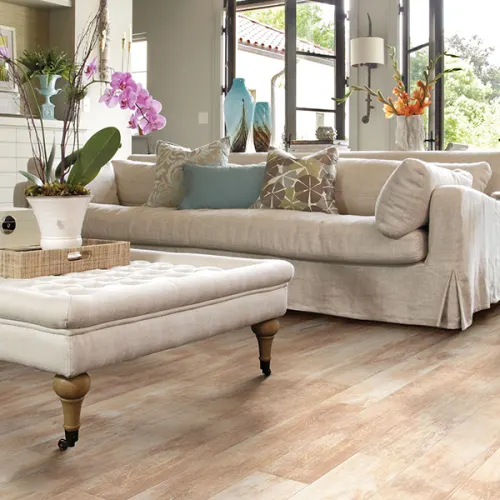
If you live near the water, you already know how fast a “just cleaned” floor turns gritty. One beach day, a few sandy flip-flops, chairs sliding back from the table, and suddenly your laminate doesn’t look so new. The good news: with a few smart habits and the right setup, you can keep those boards looking smooth and quiet, even with constant sand and busy seating areas.
Why Shore Sand Is Tough on Laminate
Laminate is built with a tough wear layer, but sand acts like fine sandpaper. Each step grinds tiny particles across the surface, dulling the finish over time. Add rolling chairs or barstools on top of that, and you get visible scuff paths in dining areas, home offices, and kitchen islands.
Two things do the most damage:
- Sand that’s allowed to spread beyond the entry
- Chair legs and casters that move over that grit all day
If your existing surface is already showing wear, it can be helpful to see what today’s laminate flooring styles look like in terms of texture, sheen, and durability. That gives you a reference point for what’s realistic to expect from your current floor and what an upgrade could solve.
Entry Strategies That Trap Sand Before It Spreads
The closer you can keep sand to the door, the less your laminate has to fight. Think of the first few feet inside as your “sand trap zone.”
Start with a sturdy outdoor mat to knock off the worst of the grit, then follow it with a dense, washable runner just inside. That second layer does the real work of catching what shoes and paws still bring in. In long hallways or open layouts, extending that runner farther than you think you need will noticeably cut down on the crunch underfoot in the rest of the room.
Regular vacuuming on the lowest hard-floor setting makes a big difference. A soft-bristle attachment will pull grit from seams without scratching the wear layer. If you ever reach a point where the traffic pattern looks tired no matter how much you clean, talking with a local team about professional installation can help you plan whether to replace only the worst zones or refresh a larger area.
Stopping Chair Scrapes Before They Start
Most laminate damage around tables and desks isn’t from a single big scrape; it’s from thousands of tiny movements in the same tracks.
Felt pads under every chair leg are the simplest fix, but they only work if they stay clean and firmly attached. Sand embeds into worn pads and turns them into scratch makers, so build in a quick check when you sweep: if a pad looks thin or dusty, replace it. For rolling office chairs, a hard-surface chair mat keeps casters from grinding the same lines into the floor all day.
Area rugs are another quiet hero in high-movement zones. A low-pile rug under the dining set or breakfast nook not only protects the laminate from chair legs, it also collects stray grit. When those rugs need a deep reset after a busy season, scheduling area rug cleaning services brings them back without introducing harsh chemicals that could harm nearby flooring.
Cleaning Laminate the Shore-Smart Way
How you clean is just as important as how often. Too much water can seep into seams, while the wrong tools can scratch.
Use these simple guidelines:
- Sweep or vacuum frequently to remove grit before it gets ground in.
- Choose a microfiber dust mop rather than a stiff broom for everyday touch-ups.
- When mopping, stick to a lightly damp microfiber pad—no standing water, no steam.
- Use cleaners approved for laminate; avoid abrasive powders and scrub pads.
For homeowners planning a larger refresh—maybe combining new laminate in main spaces with tile in baths—it often helps to talk through materials and maintenance in one conversation. A local shore-focused company that handles both cleaning and flooring installation services can help you balance durability, budget, and day-to-day care across the whole house.
Ready to Shore-Proof Your Laminate Floors?
Protecting laminate from sand and chair wear is really about systems: smart entry mats, protected seating areas, and gentle, consistent cleaning. If you’d like help choosing tougher finishes, planning a small repair, or mapping out a bigger update, you can request a free estimate and talk through options tailored to your coastal home.


