

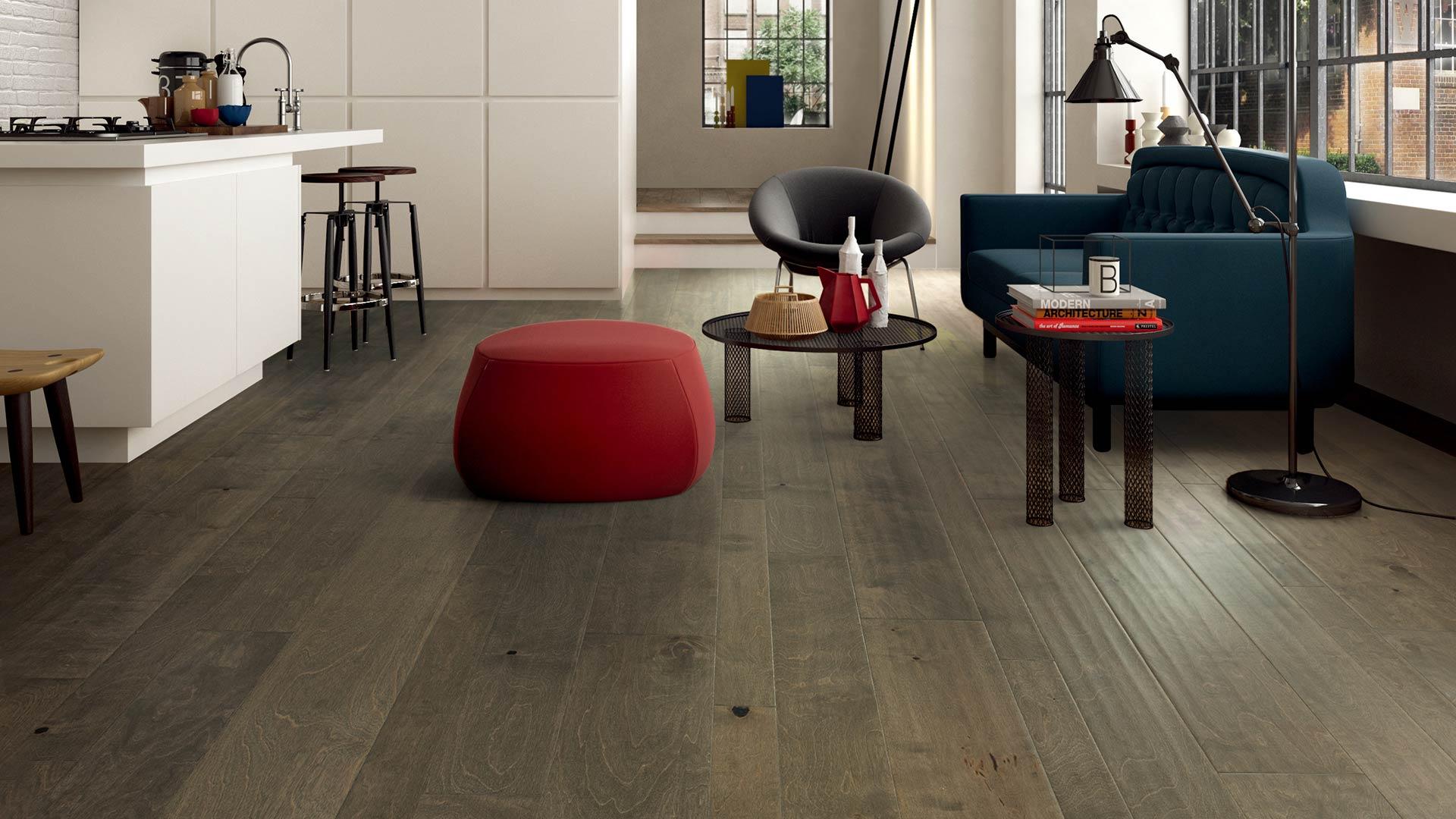
You love your hardwood, but you don’t necessarily want to run it into every room. Maybe you’re adding laminate to a basement family room, an upstairs hallway, or a sand‑magnet entry near the beach. The challenge is obvious the minute you hold a laminate sample next to your existing planks: how do you blend the two so it feels intentional, not like a cheap imitation parked beside the real thing?
Below is a practical, design‑first way to get there—especially helpful in Jersey Shore homes where humidity, sand, and light all play tricks on flooring.
Step 1: Decide if You’re Matching or Complementing
The biggest mistake is aiming for a “perfect match” between laminate and hardwood. Even the best wood‑look laminates rarely duplicate a 10‑ or 20‑year‑old floor, and the closer you get, the more small differences (texture, sheen, board length) shout “fake.”
Instead, decide which strategy fits your home:
- Soft complement: Similar undertone and depth of color, but clearly a different material.
- Deliberate contrast: A noticeably lighter or darker laminate that still shares the same undertone family.
Focus on undertone first. If your hardwood reads warm (golden, honey, red), look for laminate with a warm base. If it feels cool (ash, gray, taupe), keep the laminate in that cooler spectrum. You can sort through different undertones by browsing laminate flooring options and comparing them to a photo of your existing floor.
Rule of thumb: When in doubt, choose “cousin,” not “twin.” A cousin color feels intentional; a nearly‑twin that’s slightly off just looks wrong.
Step 2: Coordinate Grain, Board Size, and Texture
Once color is in the right family, look closely at pattern and feel. This is where many Belmar homeowners accidentally tip into “fake” territory.
Pay attention to three details:
- Grain pattern: If your hardwood has tight, subtle grain, avoid laminate with bold, rustic knots right next to it. Pair like with like.
- Board width and length: Matching width exactly can backfire if the print and texture don’t line up. Often it’s better to go a size up or down so it looks like a deliberate material change.
- Surface texture: A deeply embossed laminate right against a silky‑smooth hardwood can feel odd. Aim for similar sheen and a compatible level of texture so reflections look consistent down the hallway.
If you’re not sure how these details will read in real life, it helps to see them across multiple species and constructions. Our hardwood flooring collection shows how different grains and plank sizes behave, which makes it easier to choose a laminate that plays nicely beside the wood you already have.
Key idea: You’re matching rhythm—the visual spacing of boards and knots—more than trying to copy every last detail.
Step 3: Use Transitions to Your Advantage, Not as a Cover‑Up
A good transition piece doesn’t just solve height differences; it also gives the eye permission to accept two different materials.
In coastal New Jersey homes, we often:
- Use a wood‑stained T‑molding or threshold that echoes the hardwood color, then let the laminate shift slightly lighter or darker beyond it.
- Align transitions with natural breaks—doorways, cased openings, or a change in ceiling height—so the flooring change feels architectural, not random.
- Keep the direction of the planks consistent where possible. Even when materials change, boards running the same way help the space feel connected.
Getting the subfloor and heights right matters just as much as the color. A careful professional flooring installation will address underlayment, expansion gaps, and trim so your transition looks clean instead of patched together.
If the join is smooth and intentional, people notice the overall flow, not the fact that one surface is laminate and the other is hardwood.
Step 4: Test in Real Shore Light (and With Sand and Pets in Mind)
Light near the coast is unforgiving. Sun bouncing off water, overcast winter days, and evening lamp light all change how floors look. That’s why a laminate that seemed like a perfect match in a showroom can feel wrong once it’s in your living room.
Before committing:
- Look at samples right next to your hardwood in morning, midday, and evening light.
- Check how the two surfaces look from adjacent rooms, not just at the doorway line.
- If your home sees a lot of beach traffic, sprinkle a bit of sand on both samples and brush it away—some colors and textures hide grit much better than others.
If you’re planning to soften the transition or protect your existing wood, a well‑chosen rug can bridge the two surfaces visually. It’s easier to find patterns that coordinate when you start by browsing rugs by size and style and then layer them over your chosen laminate and hardwood.
Remember: in a real Jersey Shore home, the “match” has to survive humidity, sand, and everyday wear—not just look good in a photo.
Step 5: Think Long‑Term Maintenance and Aging
Hardwood will continue to change with light and time. Laminate basically stays the same color. That means a perfect match today may drift apart in a few years.
Planning for this:
- Don’t rely on a razor‑thin color match; give yourself a bit of intentional contrast.
- Consider how each surface will be cleaned. Hardwood can be refinished; laminate cannot, so choosing a forgiving tone and pattern is critical.
- If your existing wood is tired or uneven, you might get a much better result by refreshing it first. Our team can walk you through hardwood refinishing versus replacement options when you’re in the showroom.
If you’d like help laying out samples, planning transitions, or deciding where laminate makes sense in your Belmar or nearby Shore home, you can request a free estimate and we’ll talk through a plan that makes your new laminate and existing hardwood feel like they were always meant to live together.


