

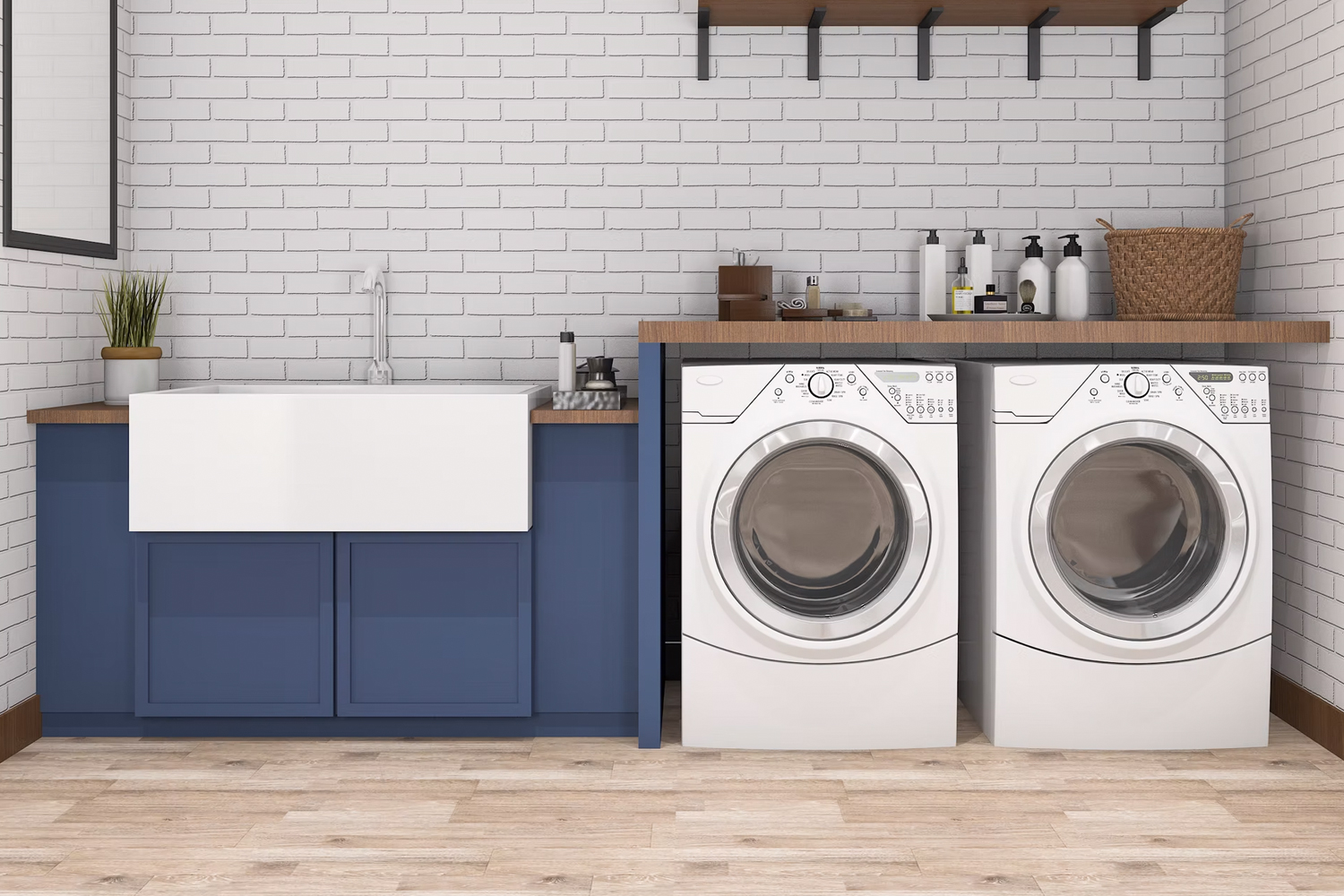
Picture a summer Saturday. The washer is thumping through sandy towels, a dehumidifier hums in the corner, and there’s a damp trail from the back door to the laundry sink. For many shore homes, that “back hall plus laundry” zone quietly takes more abuse than the kitchen. If the floor in that space can’t handle sand, splash, and salt air, you’ll see bubbling seams, curling edges, or stained grout long before the rest of the house shows wear.
This is where planning the right flooring pays off. A smart laundry or utility room floor doesn’t just look clean on day one; it keeps performing after years of wet boots, beach bags, and overworked appliances.
What Shore Laundry Rooms Really Throw at a Floor
Laundry and utility spaces in coastal homes are exposed to a specific mix of stress that most showrooms barely mention.
You have constant moisture from washers, laundry sinks, and utility tubs, plus the risk of leaks and overflows. Add to that the humidity that hangs in the air after a few loads, especially in tighter back rooms without great ventilation. If that area doubles as a side entry, every trip inside brings in sand and grit that can scratch or grind into softer surfaces.
Detergents, bleach, and rust removers can splash or drip, leaving dull spots on some finishes. Rolling machines, dehumidifiers on casters, and storage carts concentrate weight on small points, which can crush weaker materials or telegraph imperfections in the subfloor. When you put all of that together, it’s easy to see why a “pretty but basic” floor often fails early in these workhorse rooms.
Thinking through those realities first helps you narrow choices to materials that can genuinely stand up to shore life rather than just look the part.
Smart Material Choices: Waterproof First, Everything Else Second
For these spaces, water resistance is non‑negotiable. The most practical options tend to be tile, waterproof luxury vinyl, or well-chosen laminate designed for high-moisture zones.
Tile offers excellent protection against standing water, but grout lines can be harder to keep bright in a room that sees detergent drips and sandy shoes. If you like the idea of a rigid surface that shrugs off water but want a warmer feel underfoot, waterproof laminate or luxury vinyl plank can be a strong fit. Many of today’s products are built with tight locking systems and moisture-resistant cores that are far more forgiving than older generations of laminate.
Whatever you choose, how it’s put down matters as much as the product itself. Proper subfloor checks, leveling, and sealing are what keep seams tight and surfaces stable when that inevitable “washer hose came loose” moment hits. A team that focuses on prep as much as the finished look is key in a coastal setting, which is exactly what you get when you work with Floors by the Shore’s flooring installation services.
If you’re leaning toward a wood-look floor that still behaves like a workhorse, it’s worth taking time to browse laminate flooring that’s rated for heavy residential use. Many of those collections offer textures that hide minor scuffs and sand better than smooth, glossy finishes.
Design Details That Help Floors Last Longer
Once you’ve picked the right category of material, small design decisions can make the difference between a floor that always looks dingy and one that hides everyday mess gracefully.
Color and pattern do a lot of quiet work in laundry and utility rooms. Mid‑tone, slightly variegated planks or tiles tend to disguise sand and lint far better than solid, very light, or very dark choices. Subtle texture underfoot also helps reduce slip risk when someone tracks in water or a pet shakes off after being rinsed in the tub.
Layout matters too. Running planks in the direction people naturally walk can minimize the appearance of wear paths. In tile installations, choosing a grout color that’s a shade or two darker than the tile often keeps joints from looking stained even when the room has seen a long, wet week.
Finally, think about the practical edges. Waterproof transitions at doorways, properly sealed perimeters around laundry hookups, and a slight pitch away from interior walls all help direct small spills where they can be caught instead of under cabinets or into neighboring rooms.
Maintenance: Small Habits, Big Payoff
Even the best laundry room floor benefits from simple, consistent care. A quick sweep to catch sand before it’s ground in, a mat at the most-used entry, and immediate attention to spills will go a long way. In homes where the laundry zone sits next to carpeted stairs or a hallway rug, pairing that hard surface with scheduled professional carpet cleaning can keep the whole area feeling fresher and reduce grit migration from one material to the other.
If your utility room includes a slop sink or extra shower where grout has started to darken, it may be time to deep clean rather than replace. When regular scrubbing doesn’t touch the discoloration, it’s a good moment to contact us to discuss tile cleaning before you assume the floor is a lost cause.
Consistent, low-effort habits paired with the right surface are what let these behind-the-scenes rooms quietly do their job year after year.
Ready to Rethink Your Laundry or Utility Room Floor?
If your back hall or laundry space feels soft underfoot, shows swollen seams, or never really looks clean anymore, that’s your home telling you the current surface isn’t keeping up. A short conversation with a local team that understands coastal wear, humidity, and real‑world laundry use can save you from repeating the same mistakes.
Floors by the Shore helps homeowners plan durable, easy-care flooring for the hardest-working rooms in the house, from product selection through expert installation. When you’re ready to upgrade those hidden work zones, you can request a free estimate and start mapping out a floor that will actually survive shore life.


