

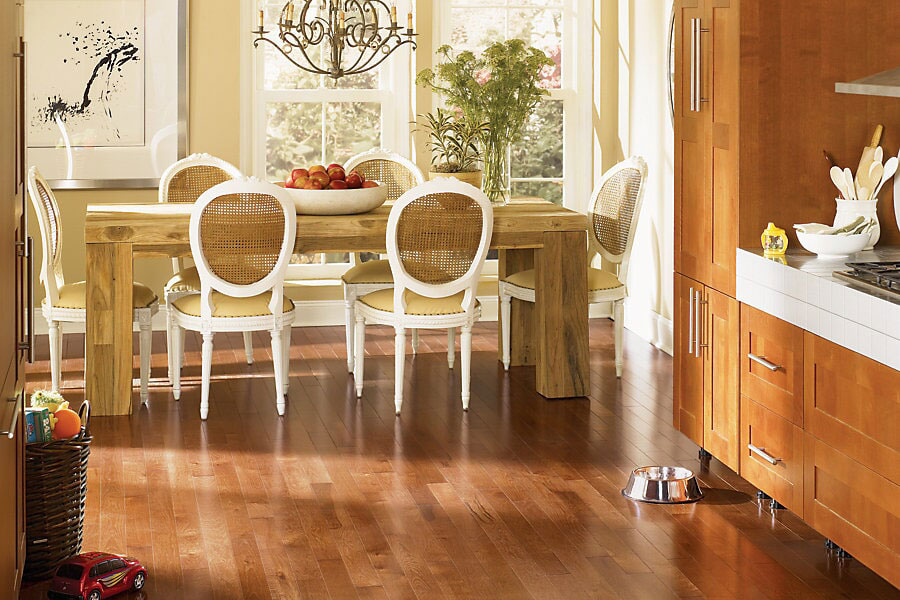
You can feel it every August: doors swell, windows stick, and older hardwood floors start to squeak and cup. Along the Jersey Shore, humidity isn’t just a comfort issue—it’s a building-material issue. If you’re planning new hardwood in a Belmar home or nearby coastal community, the species you choose (and how that wood is built) makes a big difference in how your floors look 5, 10, or 20 years from now.
Below is a practical breakdown of which hardwoods behave best in our climate, and how to pair them with the right construction and layout so they stay stable when the air gets heavy.
Why Humidity Is Tough on Hardwood
Wood is hygroscopic—it takes on and releases moisture as the air changes. In our coastal climate, that means:
- Summer: High humidity and salt air push moisture into the boards, so they expand.
- Winter: Heat and drier air pull moisture out, so planks shrink.
When those swings are big, you see:
- Cupping (edges higher than the center)
- Gapping between boards in winter
- Crowning or buckling after leaks or standing water
This is why you’ll hear us talk as much about stability as about color or grain when we walk you through our hardwood flooring collection. Some species and constructions move a lot less than others.
Engineered vs. Solid: Start With the Right Construction
Before species, it helps to decide how the wood itself is built.
- Solid hardwood is one piece of wood top to bottom. It can be sanded and refinished many times, but it moves more with humidity and needs tighter climate control.
- Engineered hardwood has a real wood wear layer on top of a cross‑layered core, which greatly limits expansion and contraction.
In shore homes—especially on slabs, over crawlspaces, or in rooms without perfectly steady HVAC—engineered hardwood usually handles humidity better. You still get the look of oak, hickory, or maple, but with a structure that’s less likely to cup when that first nor’easter blows through and you’re running heat nonstop afterward.
If you’re not sure whether your subfloor or layout is a better fit for solid or engineered, we can walk you through the trade‑offs as part of our professional flooring installation planning process.
Best Species for Shore Humidity: Oak, Hickory, and Maple
Once you’ve picked solid or engineered, species is your next big lever for stability.
White Oak: The All‑Around Coastal Workhorse
White oak is often our first recommendation for Jersey Shore humidity:
- It’s dimensionally stable compared with many other species.
- The grain is forgiving and hides small seasonal gaps.
- Tannins and tighter pores make it less prone to surface water damage than some softer woods.
In real homes, that translates to floors that look calm and even in both July humidity and January heat. Many of the engineered and solid hardwood options you’ll see in our showroom are built around white oak for exactly this reason.
Hickory: Tough, Dramatic, and Dense
Hickory is harder and denser than oak, which helps in busy, sand‑tracked households. That density also makes it relatively stable when humidity jumps. It’s a strong choice if you:
- Have big dogs or lots of foot traffic
- Like a more rustic, high‑character look with visible grain and color variation
We’ll usually pair hickory with an engineered core near the coast to get the best of both worlds: high dent resistance and better movement control.
Maple: Smooth and Stable (With Some Caveats)
Maple has a tight, subtle grain and good stability in humid climates. It’s ideal if you want a cleaner, more contemporary look. Two things to keep in mind:
- On very smooth, light maple, every scratch and gap is more visible.
- It can be more finicky to stain evenly in dark colors.
If you love the look but are worried about kids, sand, or rental turnover, we may steer you toward a slightly textured finish so small seasonal changes don’t jump out at you.
Species to Be Cautious With Near the Coast
Some woods are beautiful but less forgiving in our climate:
- Solid walnut and cherry move more and are softer, so dents and cupping can show quickly if humidity isn’t controlled.
- Very wide solid planks (of any species) are more prone to movement than narrower strips or engineered wide planks.
That doesn’t mean you can never use them; it just means we’ll want to look carefully at your subfloor, room size, and how well you can keep indoor humidity in a reasonable range. When you’re balancing aesthetics and performance for a whole home, it often helps to review examples of our recent work to see how different species and widths behave in finished spaces.
Installation and Layout Details That Help Your Floors Last
Even the best species can struggle if the installation doesn’t respect our climate. A few behind‑the‑scenes details matter a lot:
- Acclimation: Letting wood sit in your home long enough to equalize with indoor humidity before it’s nailed or glued down.
- Proper expansion gaps: Leaving the right amount of space at walls and transitions so boards can move slightly without buckling.
- Subfloor checks: Moisture‑testing plywood or concrete and adding the right underlayment or vapor retarder where needed.
These are all standard parts of our full‑service installation process, and they’re especially important in older shore homes that may have crawlspaces, additions, or patchwork subfloors.
If you’re leaning toward hardwood but still weighing other materials for kitchens, basements, or laundry rooms, you can also compare wood to waterproof luxury vinyl plank options that mimic the look with even more moisture tolerance.
If you’d like help choosing between oak, hickory, maple, and different constructions for your own shore project, we’re happy to walk you through real samples and talk through how you actually live in the space. Share a few details about your rooms, subfloor, and timeline, and we’ll help you get started with a no‑obligation estimate.


