

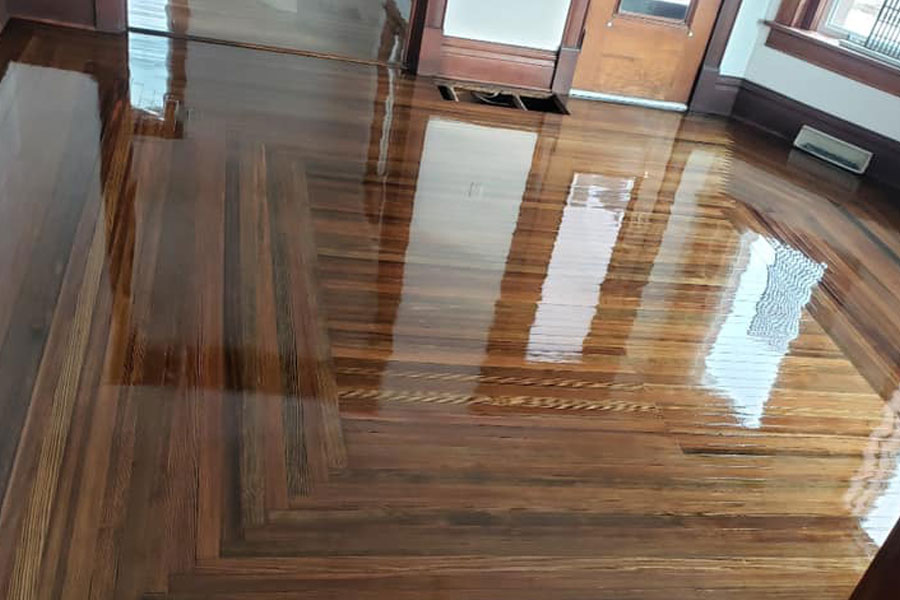
If you have ever stood in a living room and thought, “Why does this floor look elegant in one house and every footprint shows in another?” the answer is often sheen. Color matters, plank width matters, and species matters—but the finish level changes how a hardwood floor lives day to day. In homes near the water, where sand, humidity, and salt air are part of normal life, that choice becomes even more important.
What sheen actually changes
Sheen refers to how much light the finish reflects. The higher the gloss, the shinier the surface looks. That reflection can make a room feel brighter and more formal, but it also tends to spotlight dust, paw prints, and small scratches. A lower-sheen finish softens that reflection, giving the wood a quieter, more relaxed appearance that often fits the pace of coastal living better.
That does not mean one option is always “better.” It means the right fit depends on how you use the space. In a busy household, matte and satin finishes usually hide everyday wear more gracefully than semi-gloss. If you are comparing species and tones, it helps to look at different finishes in person because light interacts with oak, maple, and hickory in very different ways. You can explore engineered and solid hardwood options to get a better sense of how the wood itself influences the final look.
Why coastal homes often lean lower-sheen
In Belmar and nearby shore communities, floors work harder than people expect. Fine sand gets tracked in even when everyone is careful. Summer humidity can make debris cling to the surface. In winter, heavier shoes and damp entryways add another layer of wear. A glossy finish may look dramatic on day one, but it often asks for more upkeep if you want it to stay pristine.
A satin finish is usually the middle ground. It still gives hardwood some light and depth, but it is more forgiving than a high-gloss coat. Matte is even more relaxed and can be a smart choice for beach homes, pet-heavy households, and vacation properties where practical maintenance matters as much as appearance. If you want to see how different materials and finishes come together in real homes, browsing examples of our recent work can make those differences easier to picture.
Matching sheen to the way you live
Think about your floor from standing height, not just from a sample board under bright lights. Do you have kids running in from the yard? A dog that claims the sunny spot by the slider? Frequent weekend guests? Those everyday patterns should guide the finish decision as much as style.
For many homeowners, the best result comes from balancing beauty with tolerance for real life. Lower sheen helps disguise the swirl marks and fine abrasions that happen over time, while the right installation and subfloor prep help the floor perform well through seasonal changes. If you are planning a full update, understanding the professional flooring installation process can clarify how prep, layout, and finishing details affect the long-term result.
It is also worth remembering that hardwood is not the only way to get a wood-look floor in moisture-prone areas. For mudrooms, lower levels, or homes that see heavy summer traffic, some families compare hardwood with waterproof LVP from Mannington and COREtec before making a final decision.
The best sheen is the one you will still like in a year
A floor should suit your house on an ordinary Tuesday, not just right after installation. That is why we usually encourage homeowners in NJ coastal areas to think less about showroom drama and more about daily comfort. If you want warmth, character, and less visible wear, satin and matte are often the safest bets. If you love a crisper, more reflective look and do not mind the maintenance, semi-gloss may still be right for you.
Seeing samples under your own lighting makes the decision much easier. When you are ready to compare finishes and talk through what fits your home, you can request a free estimate.


