

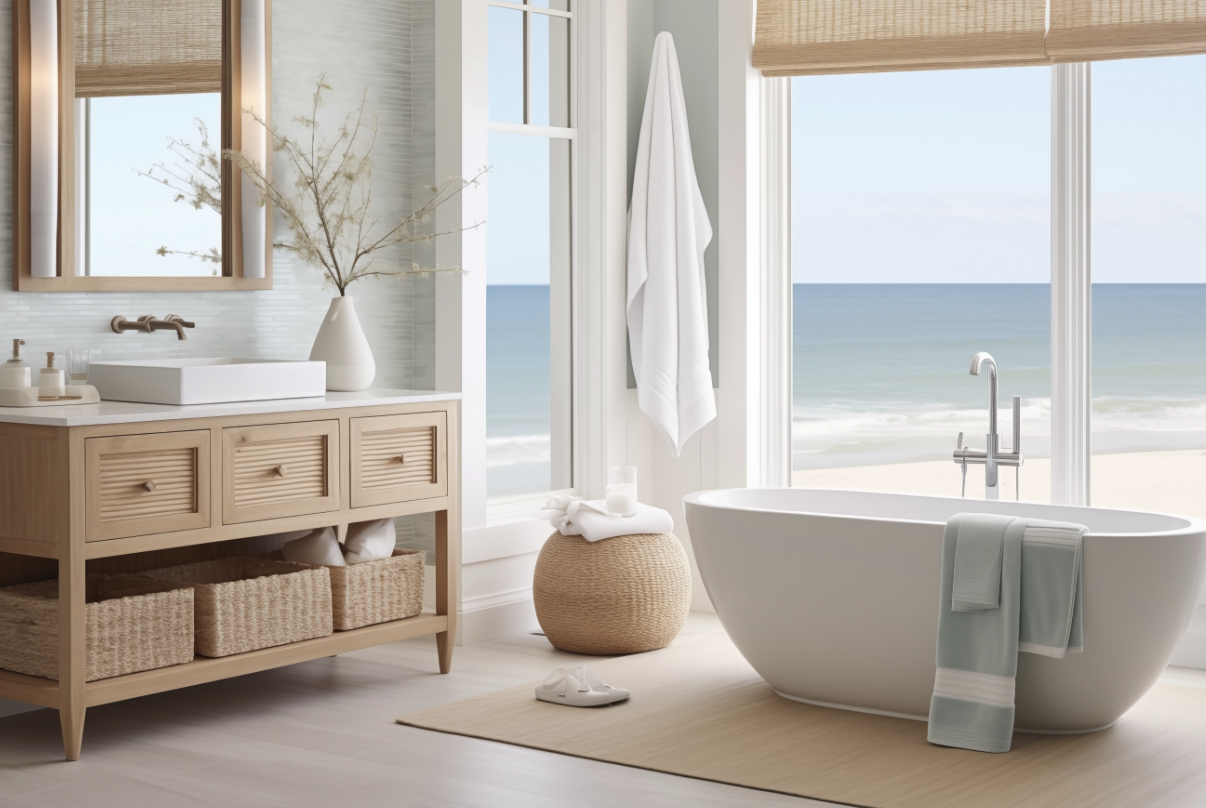
You can almost hear the gulls and feel the AC at the same time: windows cracked for the ocean breeze, kids tracking in sand, and a living room that’s part beach house, part everyday home. When you’re choosing laminate floors for that kind of space, you’re not just picking a color. You’re deciding how the whole shore-inspired look comes together—and how forgiving it’ll be of real life.
Below is a simple way to think through laminate choices so your floors feel like part of your coastal décor, not an afterthought.
Start with Your Shore Palette, Not the Sample Board
Most people start by falling in love with a single laminate plank in the showroom. A better move is to start with the colors you already live with: your sofa, wall paint, cabinets, and favorite textiles. Coastal rooms usually lean on soft whites, sandy beiges, driftwood grays, and sea-glass blues and greens.
From there, look for laminate in those same temperature families:
- Cool, weathered grays pair well with crisp whites, navy, and stainless accents
- Warm, sun‑washed beiges and light browns sit comfortably next to rattan, baskets, and off‑white slipcovers
If you want to see how many tones and wood looks are available, you can explore different driftwood and beachy finishes in the laminate flooring styles section of the Floors by the Shore site.
Key idea: Match undertones (warm vs cool) before worrying about the exact shade. That’s what makes a room feel pulled together.
Use Floor Color to Balance Light, Sand, and Sea Views
Coastal homes often have strong light on one side of the room and shadows on the other, especially when big windows face the water. Floors can either calm that contrast or make it harsher.
Lighter laminate—think white oak or pale sand—keeps small or shaded rooms from feeling heavy. It also helps bounce light deeper into the space, which is useful in hallways or interior dining areas. Slightly darker tones work well where you have intense sun and want to ground the room so it doesn’t feel washed out.
Texture matters just as much as color. A subtle, wire‑brushed or hand‑scraped finish hides sand scuffs better than a perfectly smooth, glossy plank. That’s helpful near sliders, mudrooms, and any entry that sees a lot of flip‑flops and beach bags.
If you’re planning to change multiple rooms at once and want them to flow visually, it can be worth talking through a full layout with the team that handles flooring installation services, so transitions between spaces feel intentional instead of choppy.
Key idea: Let your laminate either brighten a darker room or soften glare from big windows, and use texture to disguise everyday shore wear.
Echo Natural Shore Textures in Your Laminate Pattern
The most “coastal” rooms don’t shout with theme décor; they borrow quietly from what you see outside. Laminate can do the same by mimicking natural materials:
- Driftwood‑style planks with varied, weathered grain feel like boards that have been sun‑bleached over time
- Subtle knots and mineral streaks hint at real wood without going full rustic cabin
- Wider planks suggest old boardwalks and beach cottages more than narrow, formal strips
Once the laminate is down, you can repeat those organic textures in woven baskets, seagrass or jute rugs, linen curtains, and matte‑finish light fixtures. This keeps the room from feeling flat or overly “matchy,” even when the color palette is simple.
If you already own a few favorite rugs you don’t want to give up, bring photos or measurements when you’re comparing laminate flooring options. Seeing how those patterns sit against sample boards makes it easier to avoid visual clashes.
Key idea: Think in terms of texture families—weathered wood, woven fibers, soft linens—so your floor supports the coastal vibe instead of competing with it.
Tie Rooms Together with Repeating Elements, Not Identical Looks
In many shore houses, the kitchen, dining, and living areas all connect. You don’t need every space to match perfectly, but you do want a sense of continuity as you move through them.
A simple strategy is to repeat at least two elements from room to room:
- Keep the same laminate throughout the main level, then change the feel with area rugs and furniture
- Or, if you shift to tile in kitchens or baths, echo your wood‑look laminate tone in the cabinet stain, bar stools, or dining table
If you’re upgrading older flooring in stages, a professional installer can help plan which rooms to tackle first and how to handle thresholds so future work still feels cohesive. That’s where leaning on professional installation pays off; they think ahead about both structure and style.
Key idea: Repetition—of color, texture, or plank style—is what makes your home feel like one calm, coastal story instead of a series of disconnected rooms.
Ready to Design a Laminate Floor That Fits Your Coastal Style?
If you’d like help matching laminate to your existing cabinets, furniture, and favorite beach‑inspired pieces, Floors by the Shore can walk you through options and installation timing. You can request a free estimate to talk through styles, budgets, and how to make your floors feel as relaxed and pulled together as the rest of your coastal décor.


