

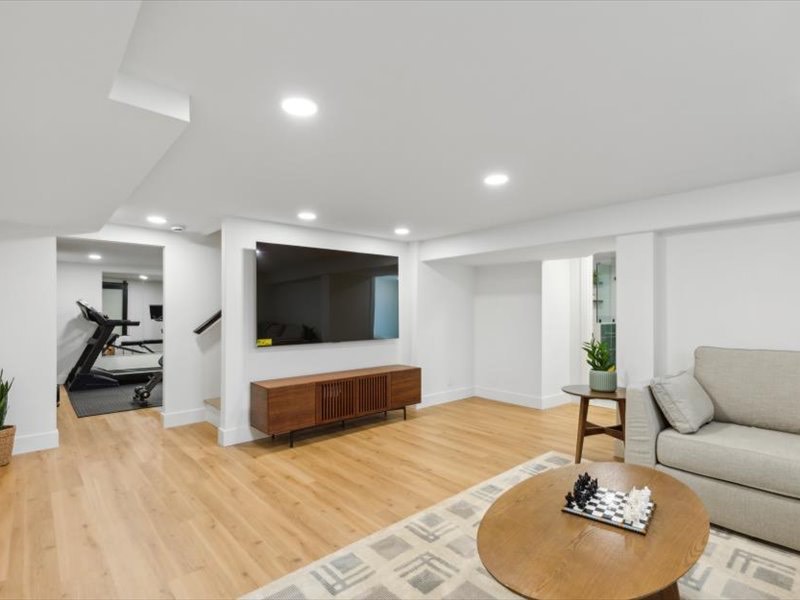
If you’ve ever walked down to your basement and felt that mix of “this could be amazing” and “I hope it never floods,” you’re not alone. Many Shore homeowners eye laminate because it looks like wood, fits the budget, and promises easy cleanup. But below grade, where moisture and temperature swings are real, laminate can be either a smart move or a short-lived mistake.
This guide walks through when laminate is a good fit for a basement, when it isn’t, and what to think through before you commit.
How Basement Conditions Affect Laminate
Laminate is built around a core made from wood fibers. That core likes stable, dry conditions. Basements tend to deliver the opposite: cool air, higher humidity, and the occasional leak or condensation line on the wall.
Two questions shape whether laminate is even on the table:
- Is the space merely “humid,” or is it ever damp or wet? A little seasonal humidity is manageable with the right product and dehumidifier. Active seepage, standing water after storms, or a history of flooding are red flags.
- What’s happening at the slab or subfloor level? Concrete that wicks moisture, hairline cracks, or unlevel spots all change which floors will behave. That’s why a good installer starts with subfloor testing and prep; you can see how that works in Floors by the Shore’s flooring installation services.
If you’re seeing efflorescence (that white powder on concrete), rust on metal items stored on the floor, or musty smells after rain, laminate may not be your first choice until the moisture problem is solved.
When Laminate Can Work Well in a Basement
In a reasonably dry basement that stays under control with a dehumidifier and has no history of water events, laminate can be a practical, good-looking option.
Here’s when it makes sense:
- You want the look of wood without hardwood risk. Many modern laminates have textured, plank-style visuals that mimic oak or hickory without putting real wood against a cool concrete slab. You can compare finishes and plank styles by browsing laminate flooring options before anyone touches the subfloor.
- The space is finished and well-managed. A basement that’s insulated, conditioned, and already dry enough for furniture, TV equipment, and stored fabrics is usually a better candidate. In that setting, laminate can handle everyday use from kids, guests, and home offices.
- You’re willing to invest in proper prep. A continuous vapor barrier, careful underlayment choice, and expansion gaps around the perimeter all matter more below grade. Skipping those steps is how you end up with swelling edges and buckled boards a year in.
In these conditions, laminate becomes a solid “value” floor: comfortable underfoot, forgiving of sand and minor spills, and stylish enough to make a lower level feel like part of the main house.
When Laminate Is the Wrong Choice Downstairs
There are also clear times to walk away from laminate in a basement, no matter how nice the sample looked under showroom lights.
Laminate is usually a poor fit when:
- Water has been on the floor before and nothing’s been fixed. If you’ve had storm water, plumbing leaks, or high-water marks on the walls and only dried things out without addressing drainage or waterproofing, any wood-based floor is at risk. In those cases, true waterproof surfaces or a different approach to the remodel are safer.
- Moisture readings are high at the slab. Professional installers can test concrete to see how much moisture is moving through it. If readings are outside manufacturer limits, installing laminate is gambling with your budget. Sometimes the better move is to choose a floor that’s more tolerant of that environment and plan laminate for upper levels instead.
- You’re finishing a space primarily for storage and utility. If the basement is mainly for laundry, seasonal gear, or workshop tools, a more forgiving, fully waterproof floor often makes more sense than a decorative wood-look plank.
When laminate isn’t the right fit, a good installer should be able to redirect you to alternatives and help you plan the rest of the project timeline. Floors by the Shore often starts that conversation by looking at the overall scope and then mapping out professional installation steps that match the room’s actual conditions, not just the wish list.
Deciding What’s Next for Your Basement
The smartest way to answer “laminate or not?” is to look at the space as a whole: moisture history, how you want to use the room, and how long you expect the floor to last before you ever think about replacing it.
If you’re leaning toward laminate but unsure about your basement’s conditions, you can explore real-world products and get eyes on the subfloor by having a local pro walk you through the options. When you’re ready to talk through moisture, style, and installation in one conversation, you can request a free estimate and build a plan that fits your basement instead of forcing a product that might not belong there.


